
This article is written in English for international readers.
Have you ever wondered if all those vitamin C supplements are really necessary? I used to ask myself: “Isn’t taking the equivalent of 100 lemons’ worth of vitamin C overkill?”
According to the Japanese Ministry of Health, Labour and Welfare, the recommended daily intake of vitamin C for adults is just 100 mg. Yet many supplements and vitamin C drinks contain more than 1,000 mg per serving. I had always thought that excess vitamin C, which is mostly excreted in urine, might be wasted.
However, recent understanding suggests there is a meaningful reason for this—especially for people like me who are prone to mental stress.
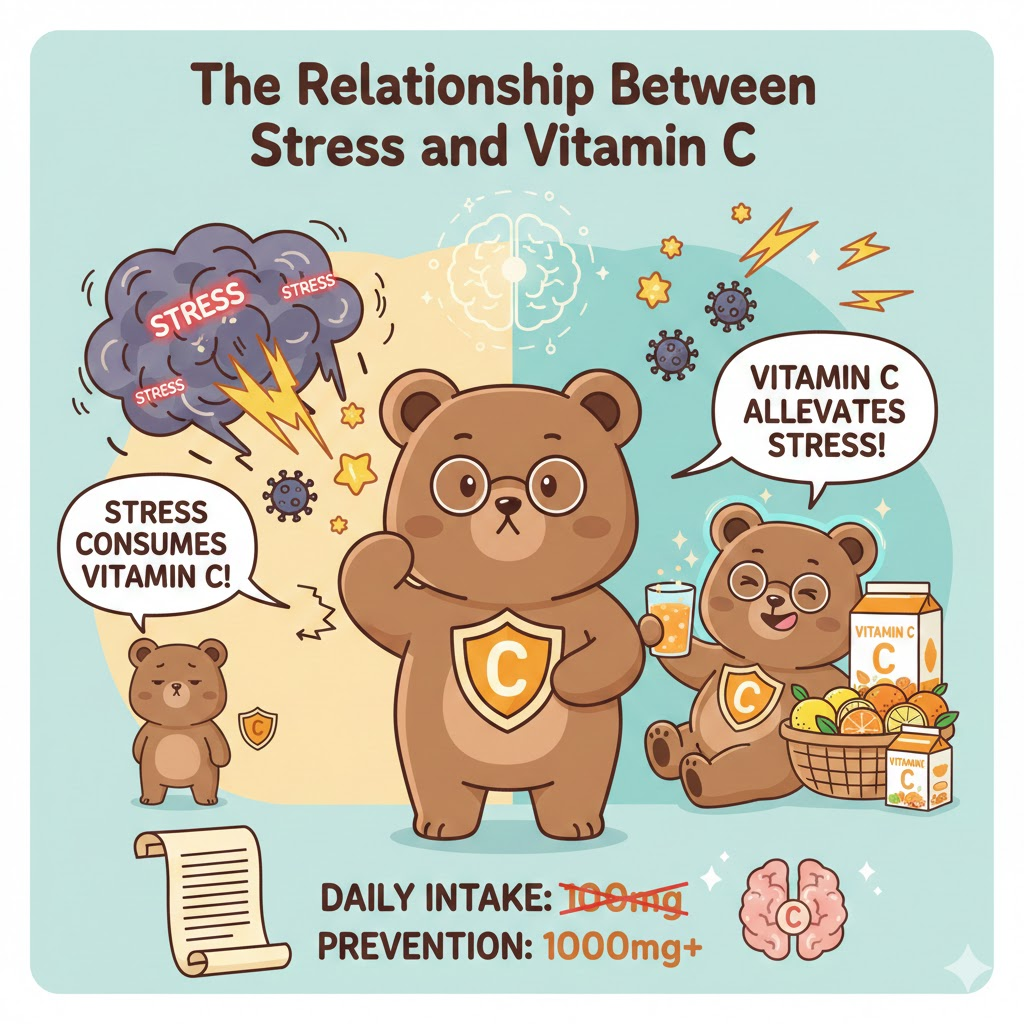
Vitamin C is a powerful antioxidant and plays an important role in stress management. When we experience stress, our adrenal glands release stress hormones such as cortisol. Vitamin C is involved in the production and regulation of these hormones. Prolonged stress can deplete vitamin C in the body, which may lead to fatigue and a weakened immune system. On the other hand, getting enough vitamin C can help reduce oxidative stress, easing both physical and mental strain.
In other words, stress consumes vitamin C, and having sufficient levels in the body may help alleviate that stress.
For this reason, it’s a good idea to make sure you get a bit more vitamin C in your daily diet, especially as a preventive measure against stress.
Thank you for reading! 😊
If you are new here, you can explore more beginner-friendly articles in English. t-kuma.net

