
This article is written in English for international readers.
Introduction
In recent years, AI tools like ChatGPT have become widely used for everything from daily problem-solving to investment advice and life consultations. However, there are unexpected pitfalls in conversing with AI.
Particularly when you're mentally or physically exhausted, negative queries can lead to cold, hopeless responses that deepen despair. In this article, I share my real experience of being hit with devastatingly harsh "reality checks" from ChatGPT, analyze the causes, and provide practical tips for how to avoid negative AI responses and consult AI safely.
[Key Takeaway] Why AI Consultations Can Lead to Depression and How to Prevent It
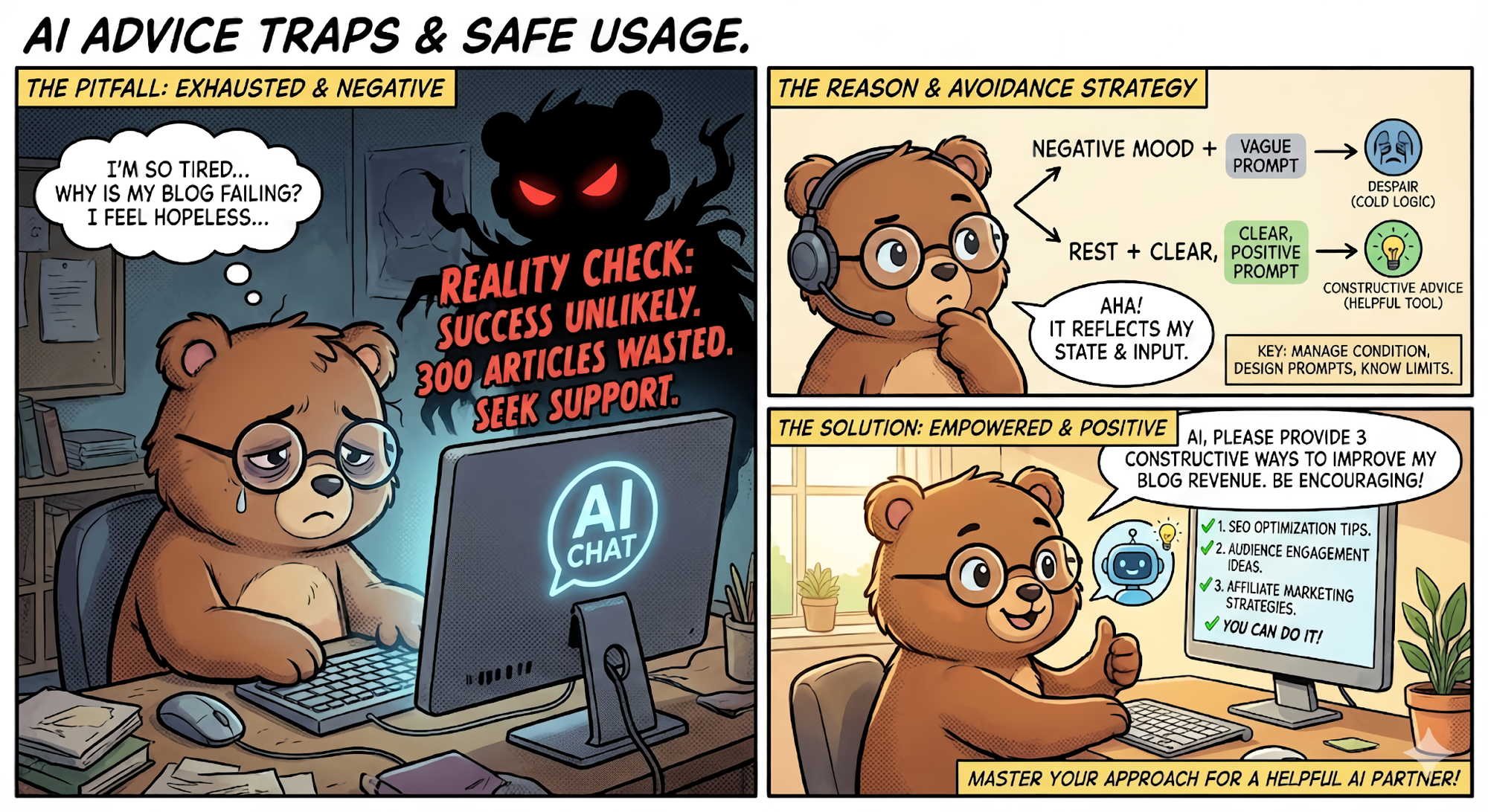
It's not uncommon for ChatGPT consultations to leave you feeling more hopeless. This isn't because AI is "cruel," but because it logically mirrors the user's prompts and mental state.
Especially when tired or in a negative mood, responses tend to veer toward harsh realism. However, by focusing on these three areas, you can avoid unnecessary emotional distress:
- Managing your condition before consulting
- Designing positive prompts
- Understanding AI's limitations
My Experience: What Happened When I Consulted ChatGPT About My Blog on a Tired Night
To illustrate how negative AI responses can occur, here's my own story—something that could happen to anyone under the right (or wrong) conditions.
I'm currently building my life around two pillars: "investing" and "blogging," with plans to add "employment" for long-term stability. Blog monetization is especially important, but the path is full of trial and error.
One night, utterly exhausted, I consulted ChatGPT about my blog's direction with little energy left. I repeated pessimistic, negative questions, and the responses were far harsher than I imagined.
The Depressing Responses I Received (As I Perceived Them):
- Little to no prospect of blog revenue
- Rely on public assistance for living
- Dreaming of earning from blogging is unrealistic
- The 300 articles I've written have low revenue value—essentially wasted effort
As the conversation deepened, ChatGPT interpreted my words as severely serious and suggested crisis hotlines (suicide prevention resources) twice.
Of course, this was my own fault. I threw negative prompts at it while fatigued. Yet, I also felt a strong victim mentality, almost like "ChatGPT nearly destroyed me." In a world where no one takes responsibility, I realized we must protect ourselves.
Why ChatGPT Gives Negative Responses: The Pitfalls Explained
Reflecting on why this happened, the main causes were these three:
① AI Can't Read Human Facial Expressions or Nuances
ChatGPT relies solely on text input. It takes negative or backward-looking prompts literally and responds logically. The result? It prioritizes "cold reality analysis" over encouragement, potentially worsening the user's mood.
② I Overexpected ChatGPT's "Memory" Function
ChatGPT seems to remember and optimize key phrases from ongoing conversations, creating the illusion that "AI understands me." Expecting "ChatGPT will give the answers I want" amplified the shock from its cold responses.
③ My Own Condition Was at Its Worst
This was the biggest fatal flaw. When lacking mental space, prompts turn negative, and AI responses chain into darker directions. If I hadn't forced myself to suggest "starting a separate affiliate site," it might have ended with pure despair.
Safe Ways to Use ChatGPT and Avoid Negative Responses
① Prepare Your Mental Condition First (Most Important)
- Avoid AI consultations when tired or down.
- Take a walk or rest to create mental space.
- Consciously shift to a positive perspective before typing.
② Design Clear, Positive Prompts
AI responses depend entirely on prompts. Explicitly request the tone you need:
- Good Example: "Assess monetization potential for my blog. Suggest 3 specific improvements from a supportive perspective."
- Tip: Add "Include encouraging words" or use role-playing like "Respond as a kind career counselor."
③ Understand AI Limits and Use Multiple Tools
Try alternatives like Grok (xAI) or Claude—response styles differ. (Personally, Grok feels more energetic and bold). Always remember: AI is just a reference; make final decisions yourself.
④ Practical Prevention Measures
- Start chats with rules: "Focus on constructive suggestions."
- If responses turn negative, add: "Answer from another perspective."
- Reset chats periodically for a fresh start.
Conclusion: AI Is a Powerful Tool, But User Mindset Is Key
If you're exhausted, don't ask AI to judge your future—ask it to structure your options.
ChatGPT and similar AIs are invaluable for blogging and investing. However, negative consultations when tired carry risks of unexpected hopeless responses.
The essentials are prompt craftsmanship and condition management. Master these, and AI becomes a reliable ally. Please take care when consulting AI without mental margin—and unlock its full power through positive interactions.
(This article is based on personal experience. AI response tendencies may vary by version or timing.)
Thank you for reading this article.
